



Ensuring the safety of school lunches is a top priority—especially when protecting students and staff from potential health risks.
In fact, according to the CDC, nearly one in six Americans (roughly 48 million people total) ends up sick because of foodborne diseases, and educational facilities are one of the biggest culprits when it comes to improper food handling.
Ultimately, a food-safe environment promotes the health and well-being of students—and supports their ability to learn while minimizing the risk of the outbreak of foodborne illness. Additionally, when food safety is prioritized, trust is generated among the parents and guardians of students… ensuring that schools remain a safe place for all kids.
In this article, we will provide you with a food safety checklist for schools, so you have all of the resources to make your school’s cafeteria realize top-notch standards.
Table of Contents
- 4 Key Elements of a Food Safety Checklist
- Free, Downloadable Food Safety Checklist for Schools
- Specific Food Safety Concerns in School Cafeterias
- Developing a Food Safety Culture in Schools
- Emergency Protocols for Food Safety
- Checklist Implementation and Compliance Monitoring
- Get the All-in-One School Lunch Toolkit – Plan, Engage, and Simplify
.jpg)
4 Key Elements of a Food Safety Checklist
A food safety checklist helps confirm that food handling in schools aligns with essential health standards.
There are four core principles at play, then, in this regard. They are: Clean, Separate, Cook, and Chill. Together, these concepts serve as the foundation of best-in-class food safety practices.
Here is a general overview of all four principles:
- Clean: Proper hand washing tends to be the first line of defense against foodborne illness. Teachers, staff, and students should always wash their hands frequently, especially in kitchen settings or prior to eating. Additionally, surfaces, utensils, and other kitchen equipment should be sanitized.
- Separate: Cross-contamination can lead to dangerous foodborne illnesses. Raw foods, such as chicken, should be kept separate from ready-to-eat foods.
- Cook: Food must be cooked to the proper temperature to eliminate the risk of harmful bacteria. Use a food thermometer to confirm meats, eggs, and other perishable items reach safe internal temperatures and are fully cooked.
- Chill: Refrigerate perishable items immediately to slow the growth of bacteria. Make sure all school refrigerators are at the proper temperature—this is generally 40 degrees Fahrenheit or below.
Now that you have a general idea of what a food safety checklist is comprised of, let’s do a deeper dive into each topic.
Clean
Proper handwashing is necessary to prevent germs from spreading in school cafeterias. Cafeteria staff and students should be encouraged to wash their hands with soap and water for at least 20 seconds before handling food—as well as after using the restroom.
Kitchen equipment and surfaces should be cleaned and sanitized on a regular basis, but especially after preparing raw foods, such as meat, poultry, and seafood.
Additionally, using food-safe sanitizers and confirming intense cleaning practices will help minimize the risk of contamination and maintain a food-safe school.
Separate
To prevent cross-contamination, raw foods, especially meats, should be stored separately from ready-to-eat foods.
Why? Because the CDC reports that improper handling of raw meat is responsible for many foodborne illnesses, including over 5M cases of Norovirus annually!
A best practice is to use separate cutting boards, utensils, and plates during food preparation of raw and cooked foods. Always store raw meats in sealed containers on the lowest shelves in refrigerators to avoid dripping onto other foods.
This will reduce the risk of germs spreading and help protect students from getting sick.
Cook
Cooking food to the right temperature kills harmful bacteria.
The USDA recommends specific internal temperatures:
- 165 degrees Fahrenheit for poultry
- 160 degrees Fahrenheit for ground meats
- 145 degrees Fahrenheit for fish and pork
It’s also important to use a food thermometer to check and make sure the proper temperature is reached. Do this by inserting the thermometer in the thickest part of the food to guarantee it’s properly cooked.
Chill
Perishable items must be stored in a refrigerator that is set to 40 degrees Fahrenheit or below—this helps ensure that bacteria don’t have an environment to grow in.
Refrigerator and freezer temperatures should be checked by cafeteria staff regularly to ensure proper working order.
What’s more, leftovers should be put in the refrigerator within two hours of serving to prevent contamination.
Also note that when thawing frozen foods, always use safe methods. This includes thawing in the refrigerator, in cold water, or in the microwave. Never leave food to sit out at room temperature as this can allow for bacteria growth.
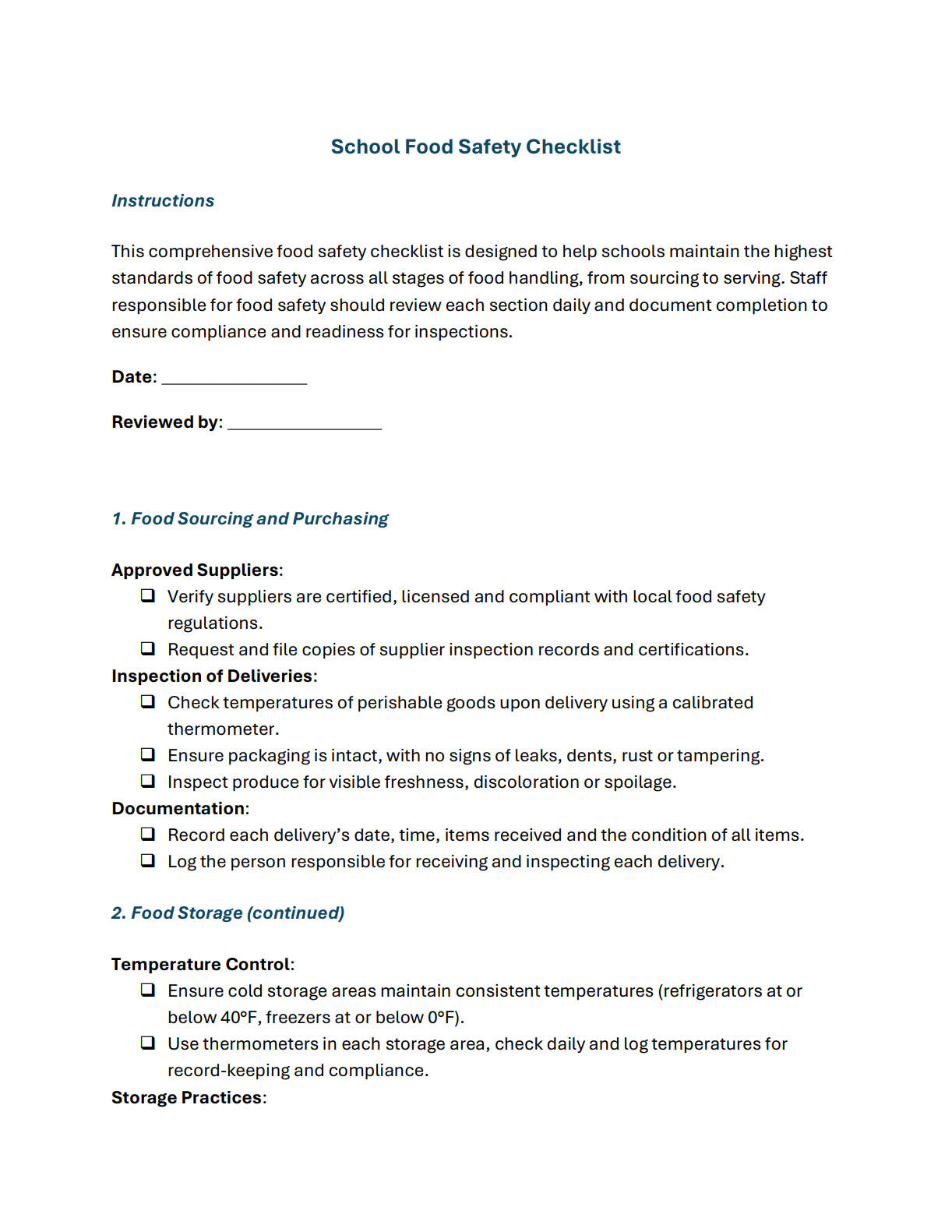
Free, Downloadable Food Safety Checklist for Schools
If you’re looking for the free, downloadable checklist for your school, click on the image to download the file.
Specific Food Safety Concerns in School Cafeterias
Managing Food Allergies
- Identify and Label Allergens: Clearly label food packaging and school lunch menus with common allergens, including peanuts, dairy, gluten, and shellfish.
- Establish Allergen-Free Zones: Designate certain areas for allergen-free foods. This helps minimize the chance of cross-contact.
- Use Separate Utensils and Equipment: Confirm separate cutting boards, knives, and storage containers are used for allergen-free foods.
- Prevent Cross-Contact: Train staff on how to handle foods properly to avoid mixing allergens with other food items.
- Regular Cleaning: Surfaces and kitchen equipment should be cleaned and sanitized regularly to remove traces of allergens.
- Staff Training: Create a meal plan and facilitate training for all school stakeholders on food allergy protocols and develop contingency plans in case of emergency.
Food Storage and Inventory Management
- First In, First Out (FIFO) Method
- Rotate stock so that older food items and ingredients are used before newer supplies.
- Label items with purchase dates to track inventory age. If something is expired or past its “good for use” date, throw it away.
- Prevent spoilage by using older food products first.
- Temperature Checks for Refrigerators and Freezers:
- Employees should regularly monitor and record temperatures as part of normal maintenance to ensure refrigerators stay at or below 40 degrees Fahrenheit and freezers at or below zero degrees.
- Use thermometers in multiple areas of a refrigeration or storage unit to confirm consistency and even cooling.
- Conduct daily checks and address any temperature fluctuations to protect food safety.
- Introduce routine kitchen audits and safety inspections as a best food storage practice.
Developing a Food Safety Culture in Schools
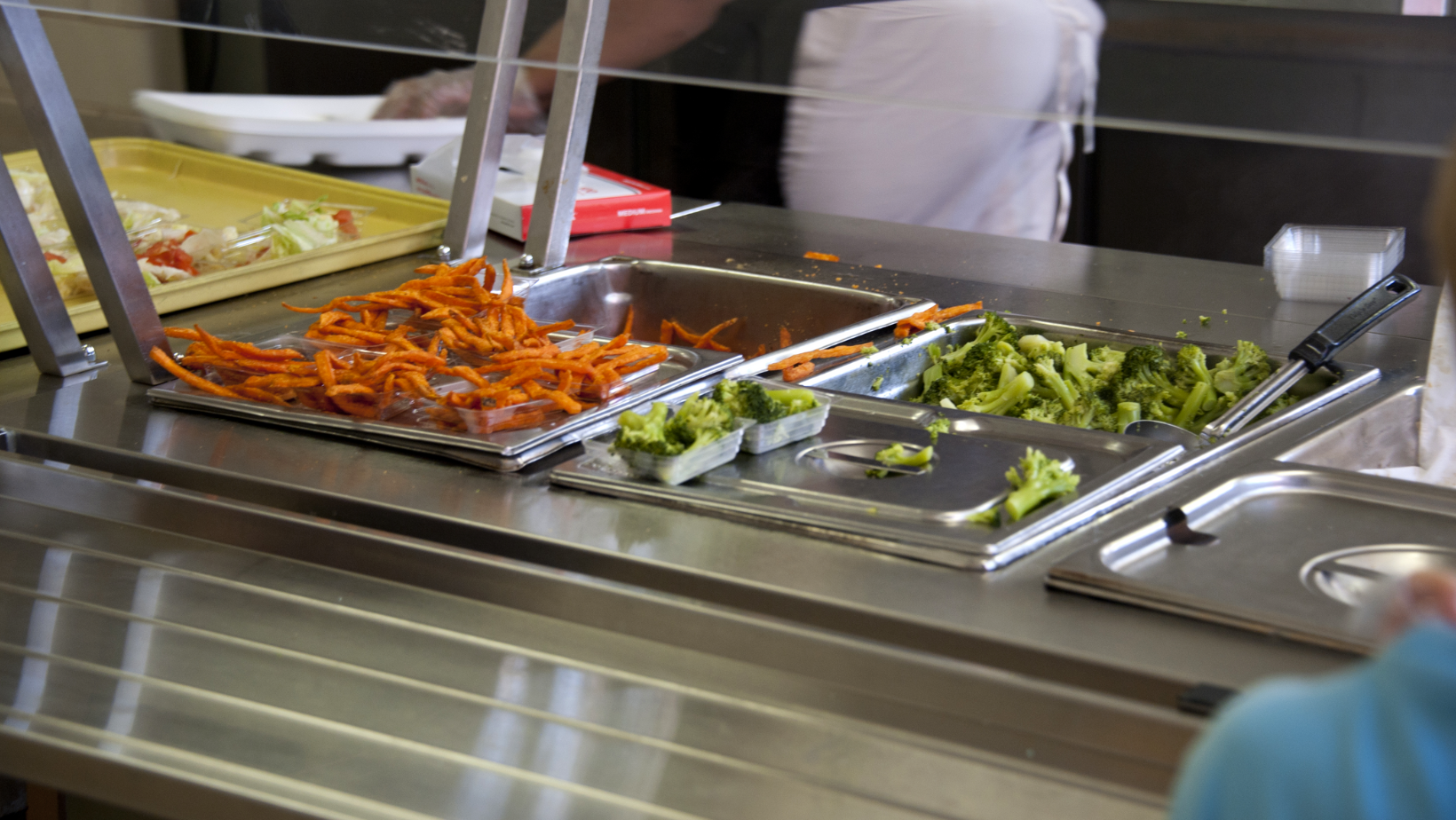
Creating a food safety culture in schools requires active participation from staff, cafeteria employees, and students—as well as the implementation of proper policies and procedures.
The USDA defines this as “your school community’s behaviors and beliefs about food safety… you will have a culture of food safety when food-safe behaviors are second nature to the members of your school community.”
And this is where training is important.
School staff and cafeteria works should be trained on:
- Proper hygiene practices
- Safe food handling
- Cross-contamination prevention
Furthermore, students and teachers should be provided with food safety education via interactive lessons. This helps boost awareness, promotes good nutrition, can save the school money and minimizes risk, which increases safety.
Emergency Protocols for Food Safety
When a foodborne illness outbreak strikes in a school, timely and well-coordinated action is necessary to protect students and staff.
Schools must have well-established policies and protocols so that outbreaks are identified and contained. Additionally, schools must have processes for managing food recalls to ensure the safety of a school community.
Here are some best practices for emergency protocols:
- Immediate isolation and reporting: Identify and quarantine any students or staff who are exhibiting symptoms. Then notify local health authorities for guidance.
- Separate and dispose of food: Evaluate what food is potentially contaminated and dispose of it according to health regulations. Make sure the food is removed from school premises in a secure manner.
- Investigate and document: Conduct an in-depth investigation to determine the outbreak’s source. Ensure all corrective actions are documented and shared with the health department.
- Communicate with parents and staff: Transparency is key in this regard. Make sure parents and staff members are aware of the situation, understand the symptoms, and know what to do if they need to report an illness. You can also create a school lunch survey to get feedback.
- Respond to food recalls: Remain abreast of any food recall issues by manufacturers or health authorities. Immediately remove recalled items from school kitchens and vending machines. Implement tracking procedures so no recalled food items are further distributed.
- Review and update protocols: After an outbreak, make it a point to review emergency procedures so they can be updated, and new training can be introduced.
Checklist Implementation and Compliance Monitoring
Using a food safety checklist helps schools assess their current practices and uncover opportunities for meal improvements. Regularly referencing the checklist will enable the monitoring of critical food safety aspects, including cleanliness, temperature control, and allergen management.
Additionally, schools should conduct periodic audits to guarantee compliance with local, statewide, and national food safety standards—and make adjustments as needed.
Finally, documenting compliance with each checklist item can allow for seamless health inspections that result in zero violations—and also serve as proof to adherence with safety protocols.
By following a food safety checklist for schools, a healthy environment can be realized for students and staff.
Get the All-in-One School Lunch Toolkit – Plan, Engage, and Simplify!

Running a school lunch program shouldn’t feel like a never-ending to-do list. The School Lunch Success Kit is your one-stop resource, giving you everything you need to keep things organized, safe, and engaging.
What’s Inside:
- Inventory Templates – Easy-to-use Excel and Google Sheets.
- Food Safety Checklists – Editable to suit your needs.
- Weekly & Monthly Menus – PDF, Word, and Google Sheets.
- Calendars Through 2028 – Plan years ahead.
- Evaluation Surveys – Gather feedback to improve.
- Lunchroom Rules Posters – Post and reinforce essential rules.
- Guide to Boosting Participation – 33 practical tips to get students excited.
Free Resources
.jpg?width=450&name=School-Lunch-Rules_thumbnail%20(1).jpg)